Debt, pay, and stocks - 17 Oct 2026 07:13 ET
America owes $40 trillion. Paychecks have barely kept up.
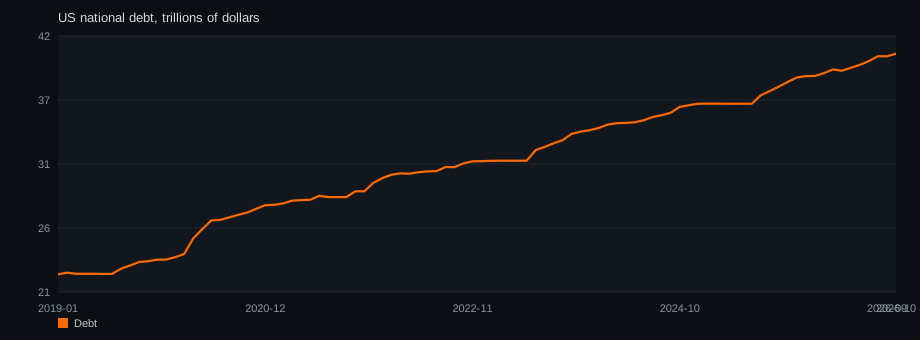
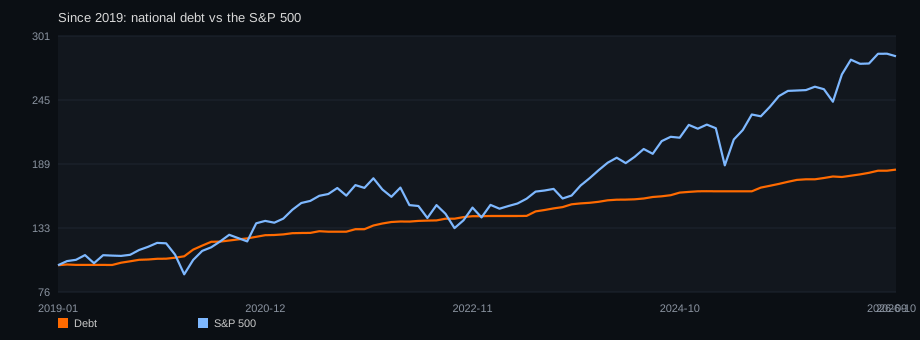
The United States now owes more than $40 trillion. Interest on that debt is running ahead of the defense budget. Prices have risen faster than many hourly wages. The stock market has risen 183 percent since 2019, and most of those shares belong to households that already owned them.
Today
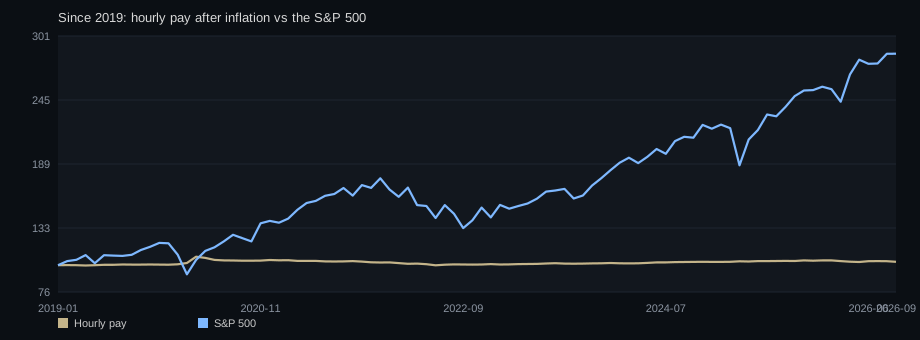
The Treasury says the United States owes $40.39T as of 2026-10-15, up from $21.94 trillion in January 2019. The ten-year Treasury yield is 5.09%. Consumer prices are +3.7% higher than a year ago, and average hourly pay is $37.81. Unemployment is 4.2%. Since 2019 the national debt is +83.7% and the S&P 500 is +183.0%. Hourly pay, after prices, is +2.9%. The borrowing is on the public books. Most of the stock-market gain has gone to households that already owned shares.
Wire
| 2026-10-16 CNBC, on Treasury data | The federal deficit reached $1.99 trillion as interest on the debt topped $1 trillion The Treasury Department said Friday that the government ran a $1.992 trillion deficit in the fiscal year that ended Sept. 30, about 12 percent more than a year earlier and the third-largest on record. Net interest on the national debt passed $1 trillion for the first time, nearly matching what Washington spends on Medicare, and the bill grows with every rise in the rates that also set what families pay on mortgages and car loans. |
| 2026-10-16 CBS News | Investors sold technology shares over the debt behind artificial intelligence The Nasdaq Composite fell 2.1 percent on Friday to 26,140 and the S&P 500 lost 1.1 percent, closing out the worst week for technology stocks since June. CoreWeave, which borrows heavily to rent out computing power, slid nearly 12 percent on the day and about 24 percent for the week, while the ten-year Treasury yield that anchors mortgage and credit-card rates held near 5.1 percent. |
| 2026-10-16 Morningstar | Bond buyers demanded more than 15 percent to keep lending to CoreWeave CoreWeave's most-traded 2031 bonds fell to 78 cents on the dollar this week, pushing their yield above 16 percent as investors questioned whether the data-center company can carry its debt. JPMorgan analysts also warned that Applied Digital may need to borrow another $8 billion to finish data centers leased to Meta and others, adding to a pile of construction debt that now costs far more than it did in June. |
| 2026-10-15 CNBC, on BLS data | Wholesale prices rose 1.3 percent in September, the sharpest jump since 2022 The Labor Department said Thursday that the producer price index climbed 1.3 percent from August to September and 6.3 percent from a year earlier, both the largest gains in more than four years. Energy prices at the factory gate rose 10.8 percent in the month, with gasoline up 20.3 percent and diesel up 21.0 percent, a squeeze that feeds through freight into grocery shelves and other household bills. |
| 2026-10-14 MarketIntelLabs, on BLS Real Earnings | Hourly pay lost ground to prices for a third straight month Real average hourly earnings fell 0.5 percent from August to September and 0.7 percent from a year earlier, the Bureau of Labor Statistics reported Wednesday. Nominal pay rose only 0.1 percent in the month, to $37.81 an hour, while consumer prices rose 0.6 percent. |
Tape
The argument
| 1 | When the government borrows, everyone shares the cost. When stocks rise, most of the gain stays with people who already own shares. Interest, refinancing, and inflation fall on taxpayers and on anyone who buys groceries. The Federal Reserve's Survey of Consumer Finances shows that most stocks are held by the wealthiest households. |
| 2 | Forty trillion dollars is the official count, not a talking point. The Treasury publishes the figure every business day. In January 2019 it was $21.94 trillion. Today's number is on this page. |
| 3 | Companies are borrowing heavily to build data centers. That borrowing shows up in corporate bonds and private loans. There is no single official figure for 'AI debt,' so this page watches ordinary credit markets next to the Treasury's books. |
| 4 | A paycheck is not the same as a stock portfolio. The Bureau of Labor Statistics publishes hourly earnings and consumer prices. This page divides one by the other, starting in 2019, and sets it next to the S&P 500. |
Watch
- How much old Treasury debt has to be refinanced, and at what interest rate.
- Whether foreign buyers, including Japan, keep buying US bonds.
- What companies are paying to borrow, especially around data-center construction.
- Whether hourly pay is keeping up with prices.
Figures come from the US Treasury, the Bureau of Labor Statistics, and market data. The charts show how those series have moved since 2019. They are not investment advice.
Today's issue is on the front. Source: page3.json.